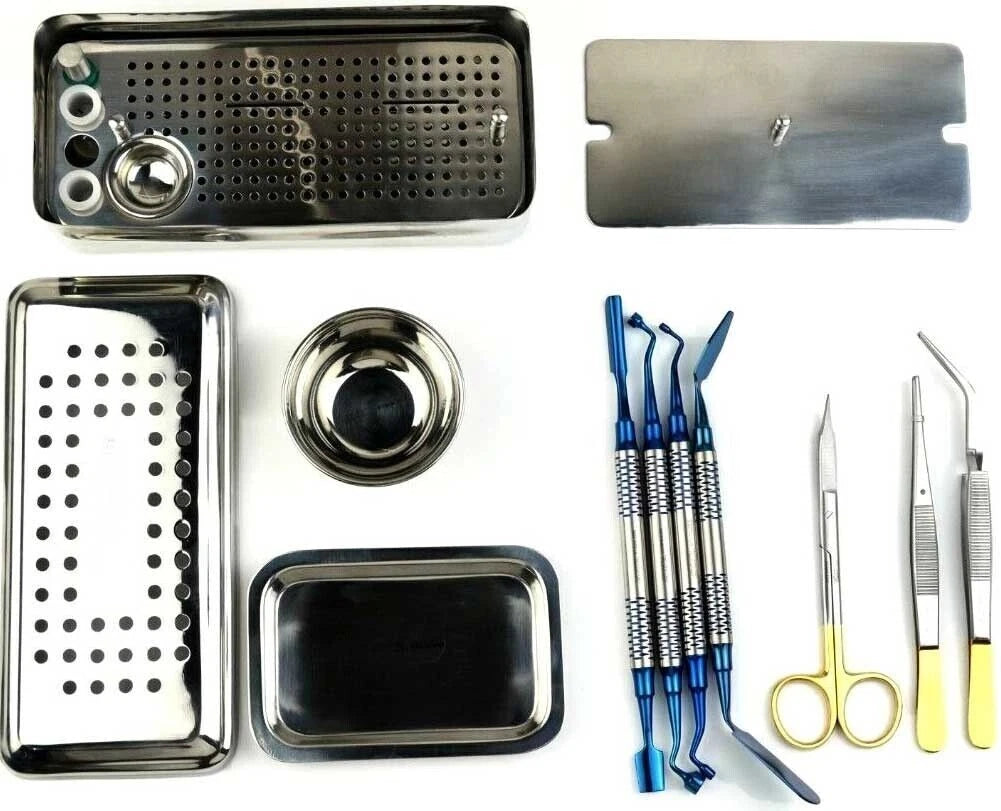
Prf kit
A PRF kit is a comprehensive set of equipment and instruments designed for the entire process of harvesting a patient's blood and processing it to create Platelet-Rich Fibrin (PRF) membranes, plugs, or injectable forms for use in regenerative medical and dental procedures.
PRF is a second-generation platelet concentrate that promotes healing and tissue regeneration by releasing growth factors and leukocytes over time.
Key Components of a PRF System
A complete PRF system typically includes two main categories of items: the Centrifugation Equipment and the Instrument Set.
1. Centrifugation Equipment (The System)
This equipment is essential for separating the blood components to isolate the PRF clot.
| Component | Function |
| PRF Centrifuge | The machine that spins the blood at specific speeds (RCF or g-force) and times to create the fibrin clot. The specific protocol (e.g., A-PRF, L-PRF, I-PRF) is determined by the centrifuge settings. |
| Blood Collection Tubes | Sterile vacuum tubes (typically plastic or glass) without any anticoagulant or additive, used to draw the patient's whole blood. They may be color-coded for different PRF protocols (e.g., red for A-PRF, green for S-PRF/Sticky Bone). |
| Cooling Accessories | Tube Cooling Sets (PomPac™) and Blood Draw Cooling Sets (PomCol®) are often included to maintain a specific temperature during blood drawing and processing, which is critical for the quality of the resulting PRF. |
2. PRF Instrument Set (The Surgical Tools)
This set includes the surgical instruments needed to handle, process, and apply the PRF clot. These tools are typically made of high-quality, autoclavable stainless steel.
| Instrument | Purpose |
| PRF Box (or Press Box) | A sterile, perforated cassette with a compression plate used to flatten the soft PRF clot into a dense, stable PRF membrane and collect the liquid exudate. |
| PRF Scissors | Delicate curved scissors (like Goldman-Fox) used to carefully separate the PRF clot from the underlying red blood cell layer (red thrombus) and to cut the membranes to size. |
| PRF Forceps | Fine-tipped forceps (like Semken or Giraffe) used to grasp, remove, and gently manipulate the delicate PRF clot and finished membranes. |
| PRF Pad/Spatula | A flat, broad instrument (often double-ended) used to carry and position the PRF membrane into the surgical site, similar to a cake server. |
| Bone Packers | Serrated or smooth-ended instruments of various sizes (e.g., 3/5mm, 6/8mm) used to compact and tamp the PRF plug or bone graft material mixed with liquid PRF (sticky bone) into sockets and defects. |
| Mini Bowl/Cupule | A sterile container used to mix liquid PRF with bone graft particulates to create the "sticky bone" composite material. |
| Sterilization Cassette | A tray or box used to organize and safely sterilize all the instruments. |
Common Applications
PRF is a popular adjunct in dental surgery for its autologous (from the patient's own body) and regenerative properties. Common uses include:
-
Extraction Sockets: PRF membranes/plugs are placed into tooth extraction sites to preserve the bone, prevent dry socket, and accelerate soft-tissue healing.
-
Bone Grafting: Liquid PRF is mixed with bone graft material to create sticky bone which improves handling, stability, and promotes faster osseointegration (bone-to-implant integration).
-
Sinus Lifts and Implantology: PRF membranes are used to protect the sinus membrane during a sinus lift procedure or to cover bone graft material in preparation for dental implants.
-
Periodontal Surgery: Used to encourage the regeneration of gum and bone tissue around teeth affected by periodontal disease.